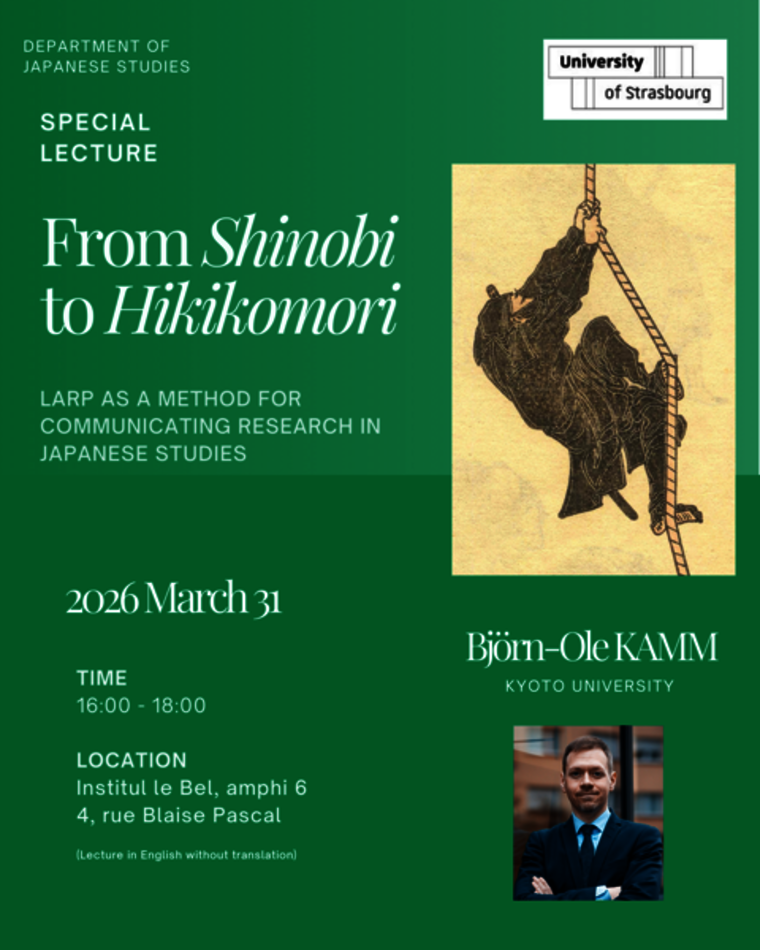
What can live action role-play (larp) contribute to Japanese Studies beyond being an object of subcultural analysis? This presentation argues that larp can serve as a method for communicating research on Japan to broader publics through embodied, narrative, and affective experience.
The talk begins with ninja-themed larps in Iga, often celebrated as Japan’s “ninja mecha.” Developed in collaboration with local institutions and researchers, these events move beyond heritage reenactment. Drawing on popular images of the ninja while grounding scenarios in scholarship on early modern shinobi, they invite participants to inhabit historically informed dilemmas. Through first-person decision-making and social interaction, players encounter the tensions between myth and archive, spectacle and lived reality—transforming historical knowledge into situated experience.
The second example shifts to present-day Japan and larps designed to foster understanding of hikikomori (social withdrawal). Co-created with affected individuals, these scenarios translate ethnographic research into structured role-play that foregrounds ambiguity, hesitation, and conflicting emotional pressures. Rather than pathologizing withdrawal, participants experience the dilemmas that shape it, challenging dominant media narratives and encouraging reflection on norms of productivity and “normal” life courses.
Finally, the talk discusses The Assembly, a deliberative larp that stages democratic decision-making under conditions of disagreement. While not Japan-specific in setting, it resonates with contemporary concerns about political participation, polarization, and procedural literacy. By embedding democratic theory in play, the scenario allows participants to practice listening, articulating positions, and negotiating collective recommendations.
Taken together, these cases suggest that larp offers Japanese Studies a mode of public-facing scholarship that does not simplify complexity but stages it—mobilizing narrative immersion and emotional engagement as tools for critical understanding.